The MTA Caste System: A Definitive Ranking of Who Has Actually Earned the Right to Be on This Train

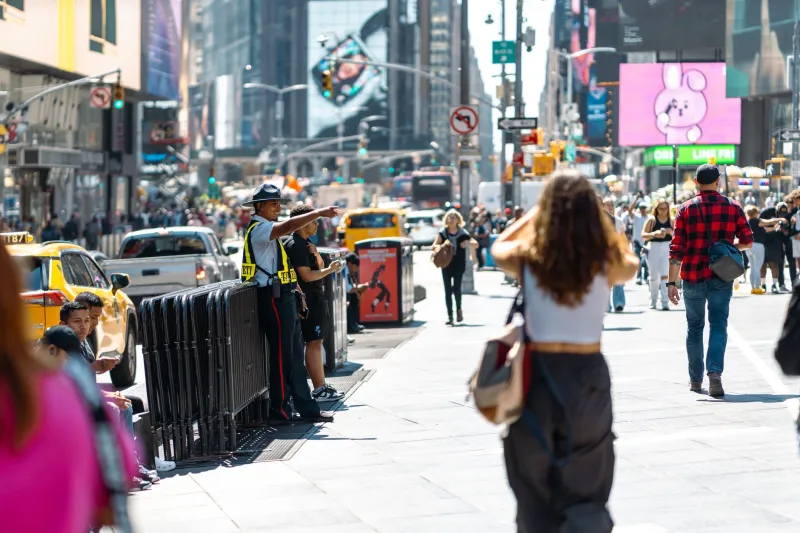
Photo by Photo by Matthew LeJune on Unsplash on Unsplash
The New York City subway is, technically, a public transportation system. It belongs to everyone. It is funded by taxpayers, regulated by the state, and theoretically neutral on the question of who deserves to ride it.
The subway, however, does not care about your theories.
In practice, the MTA operates as a functioning caste system with its own laws, its own social hierarchy, and its own deeply held prejudices. These rules are never written down. They are transmitted through eye contact, aggressive sighing, and the strategic repositioning of a tote bag. If you've lived here long enough, you know them instinctively. If you don't know them yet, you are probably part of the problem — and this article is for you.
Tier One: The 45-Minute Daily Warriors (The Untouchables)
At the apex of the subway hierarchy sits the long-haul commuter. These are the people who take the A train from Far Rockaway. The ones on the 7 from Flushing before 7 AM. The souls who have memorized exactly which subway car aligns with the exit at their transfer station, because they've done this calculation 240 times a year for four years running.
These riders have earned this train. They have suffered for it. They have read entire novel series on it. They have developed parasocial relationships with the buskers at Atlantic Terminal. They know which conductor is running late because they recognize his voice. They have, on more than one occasion, fallen asleep and woken up at exactly the right stop through some form of commuter sonar that science cannot explain.
You will not speak to them. You will not make unnecessary contact with them. If one of them is sitting down with their eyes closed, you will treat that space as sacred. They have given enough.
Tier Two: The 20-Minute Regular (The Middle Class)
This is most of us — the backbone of the subway ecosystem. We commute from somewhere reasonably far, we know how the MetroCard tap works (or we've adapted to OMNY without complaining about it too loudly), and we have strong opinions about where to stand on the platform.
We are not heroes. We are not victims. We are simply people who need to get to work and have made peace with the fact that this train smells like something we've chosen not to identify.
Our crimes are minor: occasionally forgetting to move to the center of the car, sometimes taking up too much pole with an elbow. Forgivable. We are forgiven.
Tier Three: The Two-Stop Riders (Controversial, But Hear Us Out)
Here is where the discourse begins.
The two-stop rider is not inherently a villain. Sometimes you're carrying something heavy. Sometimes it's raining. Sometimes your knees hurt. These are legitimate reasons to take the train two stops and we respect them.
But if you are a healthy adult who took the subway two stops at 8:45 AM on a Tuesday because you simply preferred not to walk six blocks — you need to sit with that. You have inserted yourself into a moving ecosystem of genuine human suffering and contributed nothing to it. You didn't even have time to look at your phone. You just stood there, taking up space, radiating the energy of someone who has never waited 12 minutes for a delayed F train in the rain.
You are tolerated. You are not celebrated.
Tier Four: The Tourists (A Special Classification)
We have to talk about the tourists.
New York City receives roughly 60 million visitors a year, and approximately all of them decide to take the subway during rush hour to get to Times Square, which is — and this cannot be overstated — walking distance from most of Midtown.
The tourist on the subway is identifiable by several key markers: the rolling suitcase that is now blocking the doors; the group of four standing in a horizontal line across the car's entire width; the person who is holding the subway map upside down but has not yet realized this; and the individual who, upon hearing the conductor's announcement, has turned to their travel companion and said, "Wait, which stop is this?"
Tourists are not bad people. Tourism is the lifeblood of New York's economy. We need them and we know it. But at 8:30 AM on a Thursday, on a packed downtown 4/5/6, that knowledge provides very little comfort.
Tier Five: The Pole Leaners (Enemies of the State)
This tier is not about commute length. It is about behavior, and the behavior in question is one of the subway's most documented crimes against humanity: leaning your entire body against the center pole during a crowded train, thereby converting a shared public resource into your personal backrest.
The pole is not for leaning. The pole is for gripping. It exists so that multiple people can hold on during sudden stops and not fly into each other. When you lean against it with your full torso, you have made a unilateral decision that your comfort is worth more than the stability of six other people. You have, in the parlance of the internet, chosen violence.
This is a bipartisan issue. Pole leaners come from every commute length, every borough, every income bracket. The pole leaner is among us always. Remain vigilant.
Tier Six: The Seat Spreaders, The Loud Speakerphone Users, and the People Who Eat Hot Food
We don't have the word count to fully litigate each of these crimes individually, so we'll address them collectively: you know what you're doing. You have always known. The fact that nobody has said anything to you directly is a function of conflict avoidance, not approval. The entire car has opinions about your shawarma.
The Unwritten Rules, Codified
For the record, because apparently this needs to be said:
- Move to the center of the car. The doors are not a lounge.
- Let people off the train before you get on. This is physics and also basic decency.
- If someone is sleeping, don't wake them up unless the train is going out of service. Let them rest. They've earned it.
- Offer your seat to anyone who looks like they need it more than you do. You know who that is.
- Headphones are a social contract. Honor them.
- The MetroCard tap is a single fluid motion. Practice it.
A Final Word on Subway Democracy
Here's the thing about the MTA caste system: it's completely made up and entirely real at the same time, which makes it very New York. The subway is, genuinely, one of the most democratic spaces in this city — a billionaire and a busker standing in the same car, subject to the same delays, breathing the same recycled air.
There's something almost beautiful about that, when you're not actively being shoulder-checked by someone's rolling suitcase.
Almost.