Carried, Judged, Condemned: What Your Subway Bag Reveals About Your Entire Personality and Life Choices
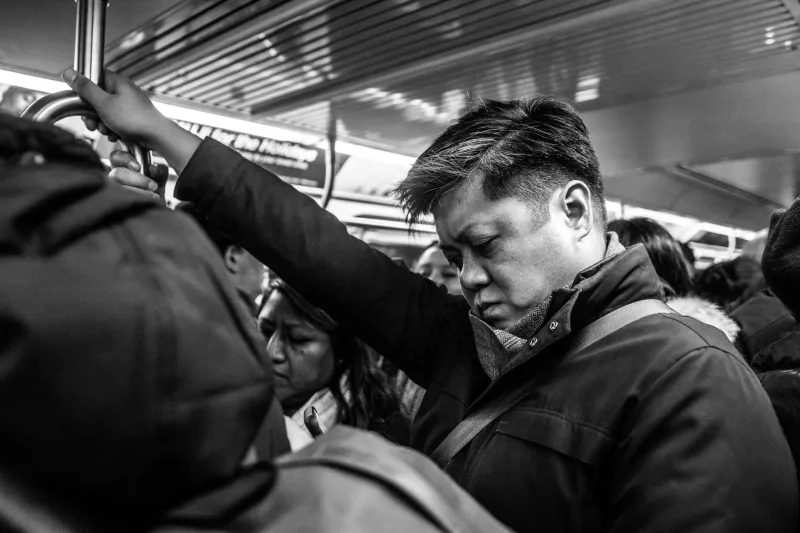
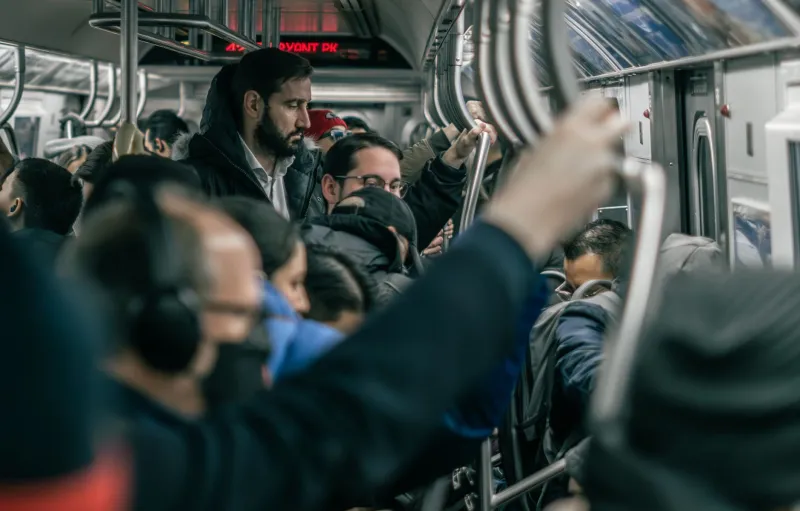
New Yorkers will tell you they don't care what you think of them. They will say this while wearing a very deliberate outfit, carrying a very deliberate bag, positioned at a very deliberate angle on a very crowded F train. The truth is that everything in this city is a performance, and nothing performs harder than what you haul onto the subway every single morning.
Your bag is a biography. A portable autobiography of your coping mechanisms, your income bracket, your origin story, and your current mental health situation. Nobody asked, but the MTA is a shared stage and you have brought props. Let's discuss them.
The Rolling Suitcase Commuter (A Cry for Help in Luggage Form)
First, a moment of silence for everyone who has ever been trapped in a subway car doorway behind someone rolling what appears to be a full Samsonite carry-on through rush hour. This person is not traveling. They live here. This is simply how they move through the world — as if the city is an airport and they are perpetually forty-five minutes from a gate.
What the rolling suitcase actually contains: a laptop, a gym outfit they will never use, three days of snacks, a portable charger that died in 2022, and the crushing psychological weight of someone who has never once felt prepared enough for anything. They are not wrong to feel this way. They are just extremely wrong about the solution.
This bag communicates one thing clearly: I am managing, but barely, and I need everyone around me to absorb some of the friction.
The Overstuffed Tote (The Art School Dropout Special)
The tote bag is the subway's great equalizer and its greatest lie. It costs nothing. It holds everything. And it has somehow become the primary vehicle through which a certain kind of New Yorker signals both their effortlessness and their complete inability to edit their own life.
The canvas tote from a Brooklyn bookstore that closed in 2021. The reusable bag from Trader Joe's that has transcended its original purpose and become a personality. The Strand tote that says I read, or I intend to, or I was near books once and it felt meaningful.
These bags are always at capacity. The straps are always threatening to give out. There is always at least one item visibly escaping — a rolled-up magazine, a water bottle tipped at a forty-degree angle, the corner of a laptop sleeve that someone is one aggressive stop away from losing forever.
The tote person has decided that organization is a capitalist construct and they are unbothered. They are very bothered. They just can't find where they put their feelings.
The Sleek Minimalist Backpack (The LinkedIn Profile Made Physical)
This is the person who spent $400 on a bag specifically designed to look like they did not spend $400 on a bag. It is matte black, or a very considered shade of gray. It has exactly two external pockets. It sits perfectly against their back like it was engineered there, which it was, by a company whose entire brand identity is the suggestion of calm productivity.
Inside this bag: a MacBook in a sleeve, AirPods in their case, a water bottle that cost more than most people's grocery runs, and a single pen that works. One pen. It works every time.
This person has a morning routine. They use a calendar app. They have opinions about standing desks. They are either genuinely thriving or performing thriving with such commitment that the distinction has become irrelevant. Either way, the bag is doing its job, which is to make everyone around them feel slightly worse about their own organizational systems.
The Reusable Grocery Bag Pressed Into Daily Service (The Broke Intellectual)
This is not a choice. This is a circumstance that has become a choice through sheer repetition. At some point — maybe after a move, maybe after a breakup, maybe after a very bad month — this person started using a grocery bag as their daily commute vessel, and then weeks passed, and now it's just who they are.
It contains something important and something completely inexplicable. A library book and a single chopstick. A folder of documents and a loose avocado. The bag communicates a deep familiarity with chaos that has curdled, over time, into something resembling peace. These people are often the most interesting people on the train. They have stopped performing. They have arrived at a kind of subway enlightenment that the minimalist backpack crowd is still paying a therapist to reach.
The No-Bag Person (A Threat)
Just a phone. Maybe keys. Nothing else. Walking onto the subway with their hands free and their conscience apparently clean.
Who are you. Where are you going. What do you know that the rest of us don't. Do you not carry things? Do you not need things? Do you exist in a state of such radical preparedness that you have pre-positioned everything you require at your destination, or do you simply not require anything, ever, because you have achieved some post-material plane of urban existence the rest of us cannot access?
The no-bag person is either the most liberated human on the train or a deeply unsettling mystery. There is no middle ground. New Yorkers distrust them instinctively and with good reason.
The Gym Bag That Has Not Seen a Gym Recently (The Optimism Industrial Complex)
This bag is large. It is full. It is carried with the energy of someone who has every intention of going to the gym today, or possibly tomorrow, or at some point this week, or at minimum before their membership renews again and they have to confront the math of what they're paying per actual visit.
The gym bag is hope made manifest. It is also, frequently, a portable locker for items that have nowhere else to go. A pair of sneakers, yes. Also: a phone charger, some mail they meant to deal with, three granola bars, and a jacket from a season ago that they keep meaning to bring home.
This bag says: I believe in a version of myself that is slightly more disciplined than my current self, and I am willing to carry that version around all day as an act of faith.
Respect, honestly. That's more optimism than most of us can afford.
The Verdict
Here is the thing about New York: the bag you carry is the negotiation you've made with the city. It is the visible record of how much you're hauling — literally and otherwise — through a place that will absolutely not slow down to accommodate the weight of it.
Some people have optimized. Some people have surrendered. Most people are somewhere in the middle, one broken zipper away from a full existential reassessment on a platform somewhere between DeKalb and Atlantic.
The subway sees all of it. The subway judges none of it, because the subway is a lawless sensory hellscape that operates outside of human morality.
The rest of us, however, are watching. And we have thoughts.