You Just Moved Here, Didn't You: The Complete Field Guide to Identifying an NYC Transplant in the Wild
New York City is, famously, a city of people who are from somewhere else. This is not a criticism — it's a structural reality. The city imports humans the way it imports avocados: constantly, at great expense, with wildly variable quality control. Most New Yorkers, if you go back far enough, are transplants or the children of transplants. The mythology of the "real New Yorker" is mostly vibes and defensiveness.
That said: there is a difference between someone who has lived here and someone who moved here recently and is still figuring out the basic mechanics of existing in this city without becoming a public hazard. That difference is observable, measurable, and occasionally hilarious.
We have studied these individuals extensively. We present our findings.
The Sidewalk Tells
The sidewalk is where transplants reveal themselves most efficiently. New York pedestrian traffic operates on an informal but deeply felt set of physics: keep moving, stay right, do not stop without warning, do not walk three-wide, do not look up at buildings while stationary in the middle of foot traffic.
Transplants violate all of these. Simultaneously.
The Sudden Stop. A transplant will halt without warning in the middle of a crowded sidewalk — usually to check their phone, look at a building, or remember something — with the energy of someone who has never considered that other people also exist and are moving at speed behind them. The resulting pileup is invisible to them. They are already looking at a photo of the Flatiron Building.
The Abreast Formation. Three to four transplants traveling together will naturally expand to fill the entire sidewalk width, walking at a pace that can only be described as contemplative. They are talking. They are experiencing the city. They are a physical barrier between you and your subway stop. You will say "excuse me" and they will not hear you.
The Wrong Direction Freeze. Upon exiting a subway station, a transplant will pause at the top of the stairs — at the top of the stairs — to orient themselves. The correct behavior is to exit the flow of traffic first. The transplant does not know there is a flow of traffic. They are looking at Google Maps. You are behind them on the stairs.
The Subway Behavioral Portfolio
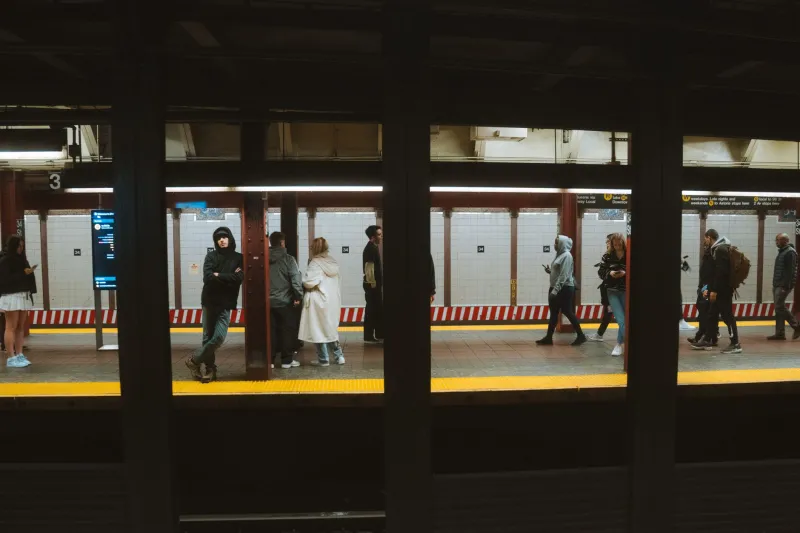
If the sidewalk is where transplants are spotted, the subway is where they are truly understood.
Thanking the Conductor. Bless their heart. They said thank you to the automated announcement voice. They waved at the conductor. They are going to be okay, but not today.
Giving Up Their Seat Pre-Emptively. A transplant will offer their seat to any person over 50, any person with a bag, any person who looks tired, any person who made eye contact. This is technically kind and also deeply disorienting for everyone involved. New Yorkers have a very specific, practiced protocol for seat-offering. Freestyle seat-offering creates chaos.
The Phone-Out, Map-Up Posture. Holding a phone at chest height, map visible, rotating slowly while standing in the middle of the car. The map is zoomed in so far it's showing individual city blocks. They have missed their stop. They will miss the next one too. They are not ready to ask anyone for help.
The Audible Reaction to the Smell. We covered the smells. A transplant will react to them. Visibly. With their face. This is their first mistake.
The Enthusiasm Problem
There is nothing wrong with enthusiasm. Enthusiasm is fine. The issue is misdirected enthusiasm — specifically, being genuinely excited about things that New Yorkers have psychologically blocked out or actively resent.
The Chain Restaurant Excitement. "Oh my god, there's an Olive Garden in Times Square, we HAVE to go." You are surrounded by the highest density of extraordinary food on the planet. You want the Tour of Italy. This is a choice we are not equipped to process.
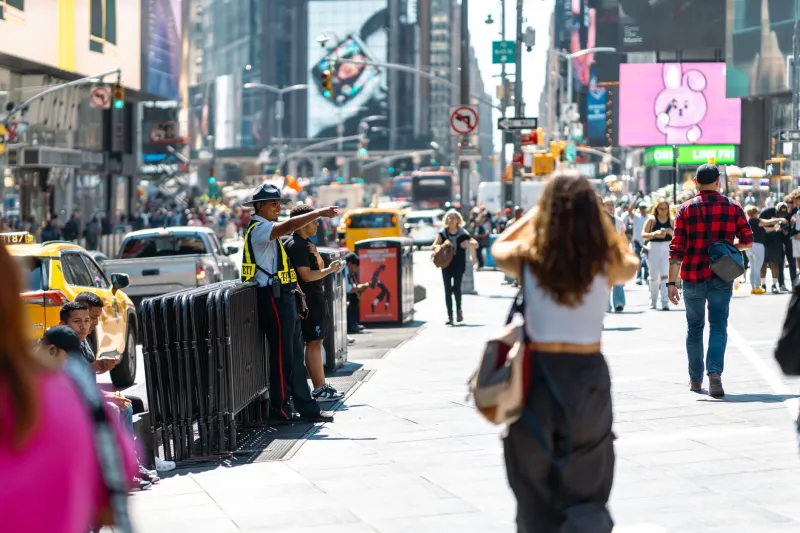
The Times Square Pilgrimage. A transplant, within the first three weeks, will go to Times Square. Voluntarily. For fun. They will take photos. They will find it exciting. Every New Yorker within a five-block radius has quietly added them to a mental list.
The Brunch Enthusiasm (Unironic Edition). Look — everyone brunches in New York. But a transplant will wait two hours for brunch at a restaurant they found on a national listicle, describe it as "worth it," and then post about it. A New Yorker would also wait two hours for brunch, but they would be furious about it and that fury is the entire point.
The Jaywalking Competency Test
This is the most reliable diagnostic tool available. Watch how someone crosses the street.
A true New Yorker jaywalks with commitment. They read the traffic, calculate the gap, and move — not tentatively, not apologetically, but with the energy of someone who has decided the light is a suggestion and they are opting out. The crossing is decisive. The eye contact with oncoming traffic is brief and communicative.
A transplant will do one of two things:
-
Wait for the light. Every time. Even at 2 a.m. on an empty street. Standing there. Waiting. The light will turn. They will cross. A single tear rolls down your cheek.
-
Attempt to jaywalk but hesitate mid-street. They started crossing. A car turned. They stopped. They are now standing in the middle of the intersection looking at the car and the car is looking at them and nobody is moving and this is going to take a while.
The confident jaywalk is not taught. It is earned through repetition and a gradual erosion of caution that the city performs on you over time. New transplants have not yet been sufficiently eroded. It shows.
The Transplant Archetype Power Rankings: L Train Edition
Not all transplants are created equal. Here, ranked by their general impact on the L train experience:
5. The Midwest Transplant. Genuinely nice. Too nice. Will make eye contact and smile. Will say sorry when the train jostles them into you. Will ask how your day is going. Deeply disorienting. Low threat level, high confusion.
4. The LA Transplant. Arrived with strong opinions about the weather, has not stopped talking about them. Considers the subway "actually kind of fun" for the first two weeks. Will discover delivery apps and never leave their apartment again by month three. Trajectory: fine.
3. The Recent College Grad Transplant. Moved here with four roommates and a job that doesn't quite cover rent but is in "the industry." Has a lot of energy. Goes out on weeknights. Will either make it or leave by year two. The city is currently processing them.
2. The Remote Worker Who "Always Wanted to Try New York." Has no office, no schedule, no reason to be anywhere at any particular time. Will stand on the platform at 8:45 a.m. with a tote bag and a cold brew, looking confused about why everyone seems stressed. They are the reason you missed the train.
1. The Person Who Moved Here to "Make It" (Undefined).** Make it at what? They're not sure yet. They have a vision board. They are going to open something, or start something, or be something. They moved here because New York felt like the right place for the version of themselves they intend to become. This is, genuinely, the most New York thing possible. We hate them a little. We respect them completely. Welcome.
A Final Note
Every insufferable transplant behavior listed above was, at some point, performed by someone who is now a fully functional, deeply judgmental New Yorker. The city does not make you a local by geography — it makes you one by slowly removing your capacity for wonder, replacing it with competence and low-grade irritation.
Give it two years. You'll be the one sighing loudly at the person who stopped at the top of the subway stairs.
We'll see you on the other side.